Stories teach us how to act in the “right” way. They are not simply examples and illustrations. When they are well told, we experience the point, and we feel hope. It is that experience, not the words as such, that can move us to action. Because sometimes that is the point – we have to act.
Marshall Ganz
Image: Canva Pro
Stories are an imperative part of identity, connection, community, and survival. We read stories to learn how other people handle situations we’re experiencing. We tell stories to share our own experiences, to inform people of who were are, and to create connections with others. In our collaborative project, we’ve explored the power of story from several angles from using it in the creative writing workshop to process drama to showcasing the voices of others.
Stories can be powerful in education in many ways. First, they support student engagement and long-term memory formation. Siegal writes that “stories serve to bridge and integrate neural networks both in the present moment and through time.” This means that narrative can impact students not only while they are learning, but also long after the fact.
Second, they support emotional and interpersonal connection in the classroom. While socio-emotional learning discussions may center around the K-12 classroom, these ideas are not irrelevant to higher education. In her research with incarcerated adult students, Susan Butcher found that storytelling helped students understand the relevancy of content to their experiences, validated their own narratives, assisted in shifting individual perspectives, and supported communication skills development (206). Additionally, Cleto and Warman found that storytelling can help students develop empathy for differences, even when the students cannot relate to characters or illustrated experiences first-hand (113).
Thus, storytelling in its various forms is a meeting place for fostering learning while also offering students the opportunity to voice their own perspectives and find value in others’ experiences.
Image: Canva Pro
Example: Digital Stories
One of the most compelling ways to connect to people through story is by use of the digital story. These snippets of a life can inform our positionality, establish connection with other people who have experienced some of the same things we have, and give insight into a life. Traditionally, digital stories are 3-5 minute films that incorporate still images, moving visuals, sound effects, music, and narration.
Creating digital stories with students can be powerful in a story-based classroom. Students hone their own voices as they compose alphabetic text and narrate their words through audio tracks. Then they expand on these words by adding other layers of image, video and sound. The result is a dynamic, multimodal depiction of that student’s unique perspective. Sharing in such a way can boost student confidence and help them develop empathy for each other.
Beyond that, educators who create their own digital stories are positioning themselves, engaging in teacher inquiry by investigating their own reasons for teaching, and showcasing aspects of their identity that matter the most to them. This type of medium can also humanize instructors for their students, helping them to connect in more authentic ways.
Mary Leoson, Jeffery Buckner-Rodas, and Finnian Burnett created their own digital stories to show the power of story in action. Note that each story varies in length, in production values, in the choices of topic, and in the images. A digital story is personal, and while an educator can guide a student in the mechanics of making a digital story, the outcome will (and should be) unique to the individual. Explore our unique stories below.
Finn’s Digital Story
View Finn’s digital story here
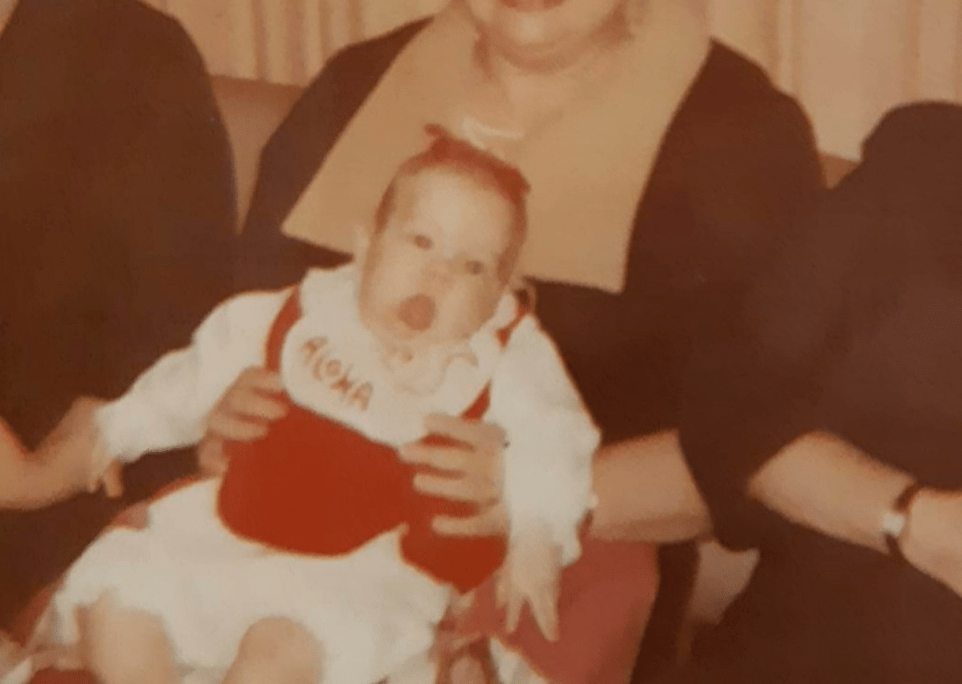
Artist’s Statement: Because so much of my capstone project centers on storytelling and identity, it felt important to talk about my own experience with not seeing certain facets of myself in the literature I was reading in school. When I created the first cut of my digital story, I used some stock photos to try to get my point across. But when I recorded the voiceover, I realized my story was too personal to use other people’s photos. I dived into old family photos, trying to put together a set that showcases the evolution of my feelings about myself and my identity as a fat person, as a queer person, as a person with mental health challenges and physical disabilities. I originally recorded a version of the story with background music and one without and I ultimately ended up choosing to omit the music because the story felt very raw to me in an unfiltered way. And, like anyone sharing their personal stories, I had to connect with the discomfort of talking about the ways in which I’ve felt othered. Yet, in asking other people to share their own stories for my project, it felt only fair to do so myself. I think my passion for storytelling and identity comes through while offering a glimpse into a sad, but ultimately hopeful part of my life and how it connects me to this project.
Image credit: All images are taken from my own personal collection and used with permission of the living people in the photographs.
Jeffery’s Digital Story
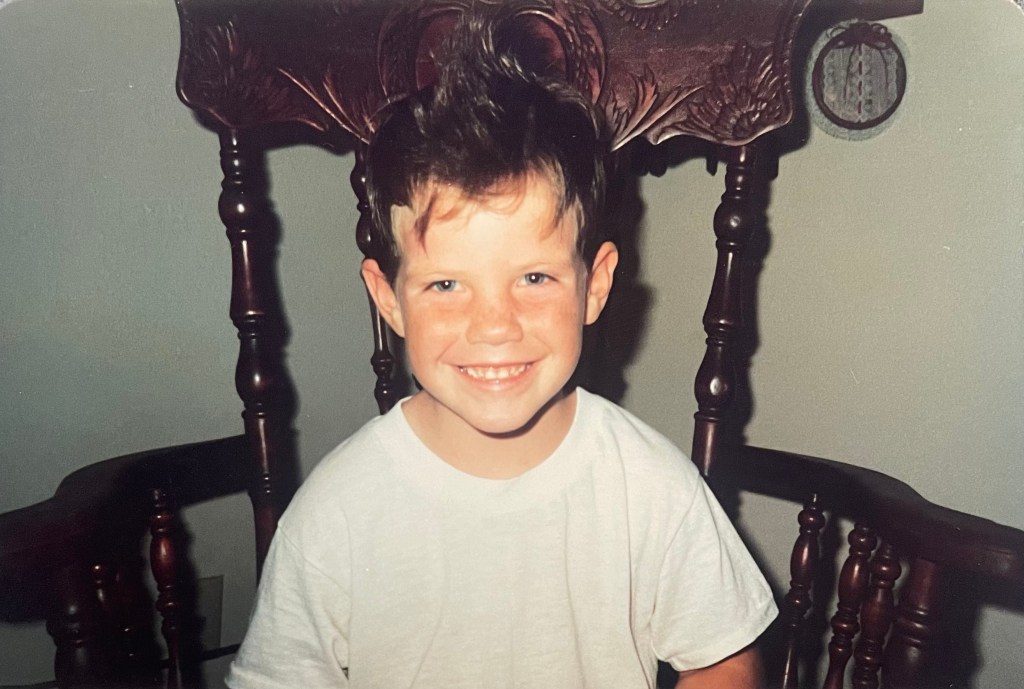
View Jeffery’s digital story here.
Artist’s Statement: My journey of self-discovery has taken many twists and turns over the years. One aspect of it is the realization that I have often held myself back in social situations. In other words, I denied self-expression so as to avoid criticism, rejection, or the potential for ridicule. In this digital story, I go far back into my past to a time when I was told stories by the elder generations of my family. These stories have stayed with me and, in a way, have informed some of my decisions. I began writing about early memories of my maternal great-grandmother and grandfather. This led me to remember a story read to me when I was a child. “The Little Match Girl”, a heartbreaking tale written by Hans Christian Andersen, taught me about light, warmth, and death. My great-grandmother came to the USA from Denmark when she was a teenager. My travels have taken me to Odense, Denmark, and I visited one if the homes where Andersen lived as a boy. I have carried pride of my familial roots into my adulthood, but I also carried guilt and shame tied to aspects of my identity that do not align with the cultural and religious beliefs of my family. I created this story as a declaration of the need to engage in storytelling in a way that never leaves out marginalized groups, for all of us have a special and important story to tell. I include many personal photographs, images I found on the Creative Commons website to help tell my story, as well as a piece of music that expresses the importance of reflection, occasional darkness, and the need for a reckoning when we consider all of the stories that must be told.
Image Credits: All licensed images from Creative Commons are listed in the final frames of the video linked above. https://creativecommons.org/licenses/
Background Soundtrack: “Prelude in c sharp minor, Op. 45” by Robert Poli. Licensed under Creative Commons: BY-NC-ND 3.0/ http://creativecommons.org/licensesby/3.0
Mary’s Digital Story
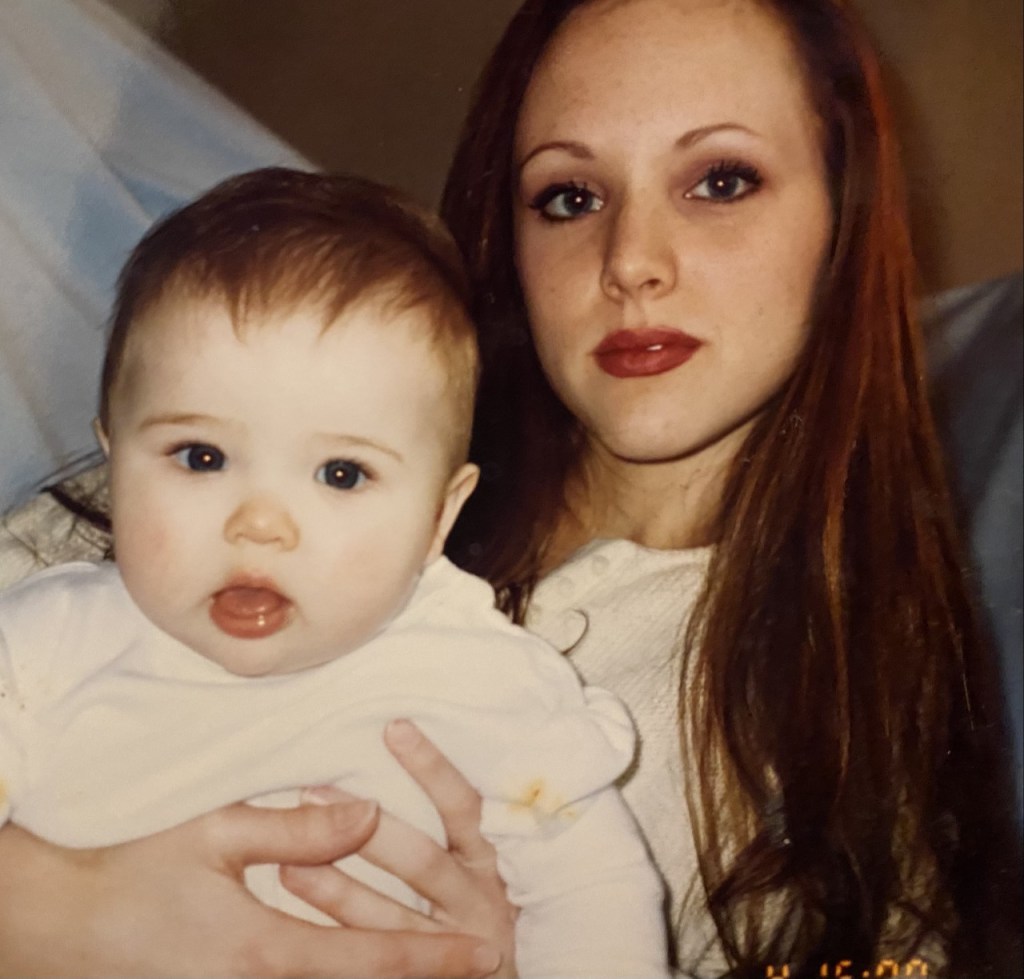
View Mary’s digital story here.
Artist’s Statement: While most digital stories are 3-5-minute pieces, there was something about telling this particular story that required more– more time, more space, more of me. I wanted to explore my evolution as a teacher, but that really began when I was a student. Initially, I felt overwhelmed about creating a digital story exploring who I am as a teacher, despite the fact that I have created many digital stories in the past and have taught students how to create them as well. Usually I begin with a poem or written piece, then build the other elements on top of that. But I found myself struggling to capture my experience in words. Finally, one day, I just turned on the microphone and began to talk as if I was describing my life to a close friend. When I was finished, the product was just over 15-minutes, which broke all the rules I had learned about producing digital stories. But, sometimes artistic rules need to be broken for the story to take shape. I chose to keep the original audio, only editing out the space that lingered in between thoughts. As I re-listened to my story, told in my own voice, I chose images of my younger self, as well as family and friends, in an effort to capture both the challenges and insights I had over the course of time. I also included photos and video of nature and personal artwork that I took over the years. The final image is one of an empty classroom; room 206 is where I held most of my classes in my early academic career and represents stepping into my own power as a teacher. At the same time, it is also a space for students to join me– as their authentic selves. Finally, I searched for a musical track that reflected both hope and heaviness, because both were part of my complex journey.
Background Soundtrack: The Calling / Exzel Music Publishing (freemusicpublicdomain.com) / Licensed under Creative Commons: By Attribution 3.0 / http://creativecommons.org/licensesby/3.0
Images: All images provided by Mary Leoson

Image: Canva Pro
Resources
To learn more about digital stories, please visit:
The Ohio State University’s Digital Media and Composition Institute (DMAC)
The University of Houston’s Educational Uses of Digital Storytelling
The University of Houston’s Digital Storytelling Course
Digital Storytelling in Education by Southeastern Oklahoma State University
Article on Digital Storytelling from Research.com
Works Cited
Butcher, Susan E. “Narrative as a Teaching Strategy.” The Journal of Correctional Education, vol. 57, no. 3, 2006, pp. 195-208.
Cleto, Sara and Brittany Warman. “Teaching with Stories: Empathy, Relatability, and the Fairy Tale.” Marvels & Tales, vol. 33, no. 1, 2019, pp. 102-115.
Siegal, D. J. Developing Mind: Toward a Neurobiology of Interpersonal Experience. Guilford, 1999.
© 2023 by Mary Leoson, Finnian Burnett, & Jeffery Buckner-Rodas
 Story-Based Pedagogy